
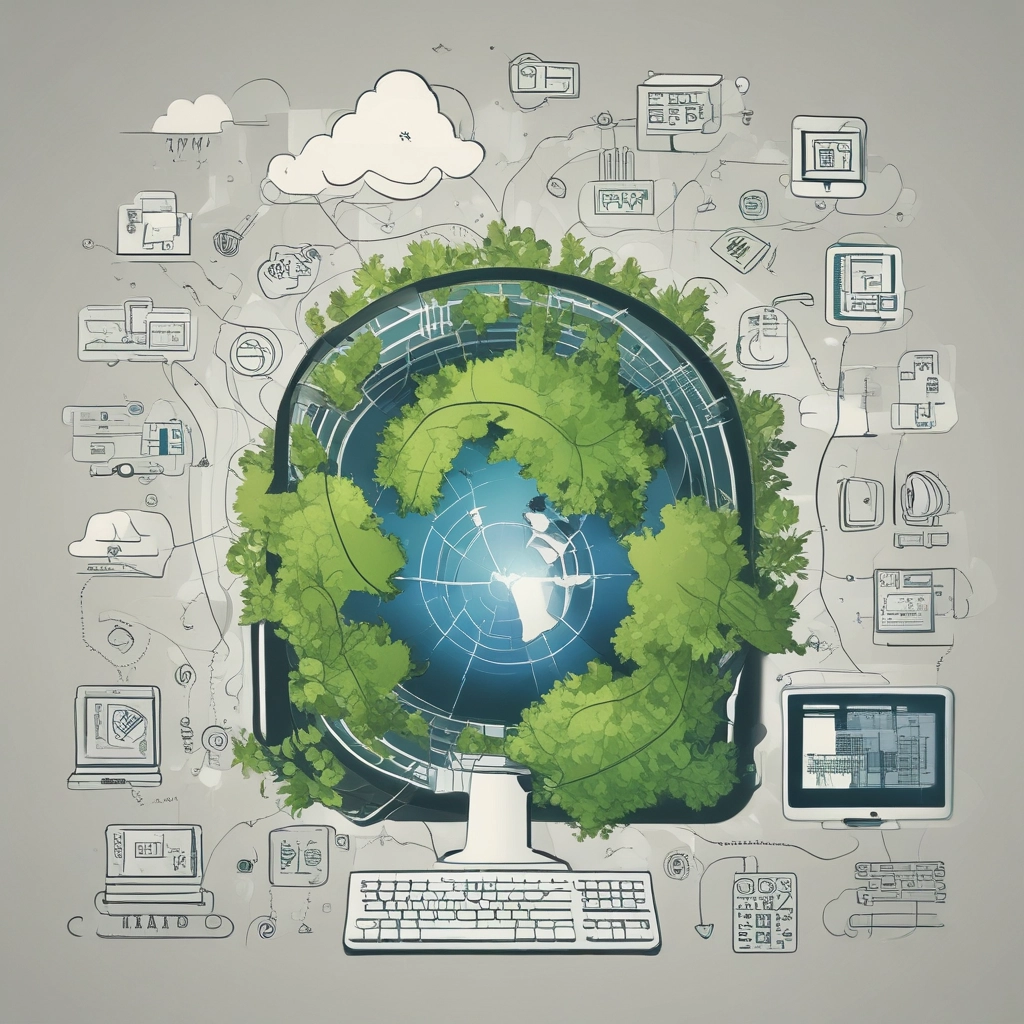
The relentless march of technological advancement has ushered in an era of unprecedented connectivity, innovation, and convenience. Yet, this digital revolution carries a significant environmental footprint. From the energy-intensive processes of manufacturing hardware to the vast power consumption of data centers and the growing mountains of electronic waste, traditional computing practices pose a considerable challenge to the planet’s delicate ecosystems. The information and communication technology (ICT) sector alone contributes a notable percentage to global greenhouse gas emissions, and the energy demands of data centers are escalating at an alarming rate. As our reliance on digital services deepens, driven by transformative technologies like artificial intelligence (AI) and cloud computing, the need for a paradigm shift towards sustainability becomes ever more critical. This necessitates a focused exploration of sustainable technology solutions, green computing, and energy-efficient data centers as vital pathways to mitigate the environmental impact of our digital lives and forge a more environmentally responsible future.
The data unequivocally demonstrates the substantial and increasing environmental burden of traditional computing. The sheer volume of greenhouse gases emitted by the ICT sector and the immense energy consumed by data centers highlight the urgency of finding more sustainable approaches. Furthermore, the lifecycle environmental impact of individual devices, from their creation to their disposal, contributes significantly to the overall problem. The staggering amount of electronic waste generated annually, with a disturbingly low rate of recycling, presents another critical challenge demanding immediate attention. The confluence of these factors underscores the pressing need for systemic changes in how we design, manufacture, use, and dispose of technology.
The emergence of AI and cloud computing, while offering remarkable capabilities and driving further digitalization, also amplifies the environmental challenges associated with the technology sector. The computational intensity required for training sophisticated AI models consumes vast amounts of energy, placing additional strain on power grids and increasing carbon emissions. Similarly, the large-scale infrastructure underpinning cloud services, while potentially offering resource efficiencies, still contributes significantly to overall energy consumption.n This creates a critical juncture where the pursuit of technological progress must be intrinsically linked with a commitment to environmental stewardship, demanding innovative solutions that can decouple digital advancement from ecological degradation.
Decoding the Definitions: Laying the Foundation
Before delving deeper into the innovations, it’s essential to establish a clear understanding of the key terms that form the bedrock of this discussion.
Sustainable Technology Solutions represents a holistic approach to technology that aims to minimize negative environmental impacts while maximizing long-term ecological viability. This encompasses not only the direct environmental footprint of the technology itself but also its role in enabling broader sustainability across various sectors. Sustainable IT, a closely related concept, focuses on employing information technology in a manner that reduces energy consumption, minimizes waste, and promotes environmentally conscious decision-making within the IT industry. Ideally, sustainable technology involves both reducing the carbon footprint of tasks and utilizing greener production methods. It’s a framework of digital solutions designed to drive positive environmental, social, and governance outcomes, increasing the energy and resource efficiency of IT services and empowering organizations to achieve their own sustainability goals This concept extends beyond the IT sector, using technology as a tool for broader sustainability initiatives like smart energy grids and efficient resource management. The lifecycle of technology is paramount, encompassing sustainable manufacturing practices, efficient management during use, and responsible disposal, emphasizing the principles of a circular economy. Key principles underpinning sustainable technology include energy efficiency, the adoption of renewable resources, the reduction of waste (particularly electronic waste), and the promotion of a circular economy where resources are reused and recycled.
Green Computing, often referred to as sustainable computing or green IT, is the specific practice of designing, manufacturing, using, and disposing of computers, servers, and associated subsystems in an environmentally responsible and resource-efficient manner. The core objective is to limit the harmful impact on the environment by reducing carbon emissions and energy consumption throughout the entire lifecycle of technology components. This includes the selection of sustainably sourced raw materials, the minimization of hazardous substances, the maximization of energy efficiency during the product’s lifespan, and the promotion of recyclability or biodegradability at the end of life. Green computing practices span a wide range of activities, from implementing smart technologies and powering down devices when not in use to selecting energy-efficient hardware and establishing eco-friendly e-waste disposal policies. It also encompasses the design of green data centers, the utilization of cloud computing for resource sharing, the promotion of telecommuting to reduce energy consumption from commuting, and the development of energy-efficient software. Ultimately, green computing aims to achieve the highest possible performance with the least amount of energy expended.
Energy-Efficient Data Centers, also known as green data centers or sustainable data centers, are facilities that house IT infrastructure and employ energy-efficient technologies and strategies to optimize energy consumption and minimize their overall environmental impact. The fundamental goal is to reduce energy demand and carbon emissions while maintaining the critical functionality and performance required for data storage, management, and dissemination. These facilities leverage a variety of innovative technologies and strategies, including advanced cooling systems like liquid cooling and free cooling, the integration of renewable energy sources such as solar and wind power, efficient workload management techniques, and the deployment of low-power, high-performance hardware The design and operation of energy-efficient data centers prioritize resource conservation, aiming to achieve maximum output with minimal energy input.
The definitions of sustainable technology solutions, green computing, and energy-efficient data centers are intrinsically linked, forming a hierarchical framework for environmental responsibility in the technology sector. Sustainable technology provides the overarching principles and goals, encompassing a broad range of applications aimed at minimizing environmental harm. Green computing represents a focused application of these principles specifically to the realm of computing devices and practices, addressing their entire lifecycle. Energy-efficient data centers are a critical subset within green computing, concentrating on the infrastructure that underpins much of modern digital activity and is a significant consumer of energy. This layered understanding allows for a comprehensive and targeted approach to achieving sustainability in the digital age.
A crucial element that permeates all three definitions is the emphasis on a lifecycle perspective. Sustainability in technology is not solely about the energy consumed during the operational phase; it demands a comprehensive consideration of the environmental impact from the initial design and manufacturing processes, through the period of active use, and extending to the responsible disposal or recycling of the technology at the end of its life. This holistic viewpoint is essential for truly minimizing the environmental footprint of the technology industry, ensuring that efforts to improve energy efficiency during use are not undermined by unsustainable practices in manufacturing or disposal.
Fueling the Green Revolution: Innovations in Green Computing
The journey towards a more sustainable digital future is being propelled by a wave of innovations across various facets of computing.
Energy-Efficient Hardware forms the foundation of green computing. Modern processors, including both CPUs and specialized GPUs, are increasingly designed with energy efficiency as a paramount consideration. Techniques like dynamic voltage and frequency scaling (DVFS) allow these processors to adjust their power consumption based on the workload, minimizing energy use during periods of low activity. Custom chip designs, such as those utilizing ARM architectures, are also contributing to lower power consumption while maintaining high performance. For computationally intensive tasks like machine learning and graphics rendering, specialized GPUs are being developed with enhanced energy efficiency.y Furthermore, the adoption of solid-state drives (SSDs) over traditional hard disk drives (HDDs) significantly reduces power consumption while offering faster data access. Initiatives like the Electronic Product Environmental Assessment Tool (EPEAT) play a crucial role by providing a framework for assessing and certifying the environmental performance of electronic products, including their energy use. Recognizing the growing energy demands of artificial intelligence, companies like Intel are actively developing frameworks and tools to measure and ultimately improve the energy efficiency of AI computing.
The Power of Optimization extends beyond hardware to the realm of software. Optimizing algorithms to reduce computational complexity directly translates to lower resource consumption and energy use. Writing clean and efficient code, employing efficient data structures, and minimizing unnecessary loops are fundamental practices in green software development. The emergence of AI-driven code optimization tools offers the potential to further reduce the energy footprint of applications by identifying and rectifying inefficiencies. For demanding applications like large language models (LLMs) in AI, techniques such as data pruning (removing less relevant data) and iterative scaling (building large models from smaller, more efficient ones) are being employed to minimize the data and computational resources required for training and operation. Moreover, the inherent elasticity and resource management capabilities of cloud-based platforms enable dynamic scaling of resources based on actual demand, thereby avoiding the energy waste associated with idle or underutilized on-premises systems.
Leveraging Virtualization has become a cornerstone of green computing strategies. Server virtualization allows multiple virtual server operating systems to run on a single physical server, leading to significant improvements in resource utilization and a reduction in the overall number of physical servers required. This consolidation directly translates to lower energy consumption, reduced cooling needs, and a smaller physical footprint for IT infrastructure. Beyond servers, storage virtualization (pooling physical storage into a single virtual device) and network virtualization (combining hardware and software network resources) further optimize resource utilization and minimize the need for extensive physical infrastructure The benefits of virtualization extend to substantial energy and cost savings, as well as a reduction in the physical space required for data centers. Advanced virtualization techniques, such as virtual machine migration (allowing live transfer of VMs between physical machines without disruption) and VM consolidation (packing VMs onto fewer physical servers), play a crucial role in efficient workload management and energy optimization within the data center.
The advancements in energy-efficient hardware demonstrate a concerted effort to minimize the power demands of computing at its core. Innovations in processor design, memory technologies, and specialized accelerators are contributing to a significant improvement in performance per watt. The development of standards and measurement frameworks further supports this trend, fostering accountability and driving continuous improvement. Software optimization represents a powerful and often underutilized approach to green computing. By focusing on efficient algorithms and coding practices, developers can dramatically reduce the energy consumed by applications, highlighting the critical role of software in achieving sustainability goals. Virtualization has emerged as a transformative technology in green computing, offering substantial benefits in resource utilization, energy savings, and infrastructure consolidation. Its widespread adoption across servers, storage, and networks underscores its importance in creating a more sustainable and efficient IT landscape.
Building the Future: Technologies for Energy-Efficient Data Centers
Given the significant energy consumption of data centers, innovations in this area are paramount for achieving a greener digital future.
Cooling Innovations are critical for reducing the energy footprint of data centers. Traditional air conditioning systems are highly energy-intensive, prompting the development of more efficient alternatives. Advanced cooling technologies like liquid cooling and immersion cooling offer superior heat dissipation capabilities, particularly for the high-density servers used in modern data centers. These methods use liquids to directly cool components, offering more precise temperature control and reduced energy consumption compared to air-based systems. Free cooling leverages natural environmental resources, such as outside air or water, to cool data centers, significantly reducing the reliance on energy-intensive mechanical cooling, especially in climates with cooler ambient temperatures Hot aisle/cold aisle containment is another effective strategy that optimizes airflow within data centers by physically separating the hot exhaust air from the cold supply air, preventing them from mixing and allowing cooling systems to operate more efficiently. The integration of artificial intelligence (AI) into data center management is also driving energy efficiency in cooling. AI-powered systems can monitor, predict, and optimize energy use in real-time, including dynamically adjusting cooling system parameters based on workload and environmental conditions Other techniques contributing to energy-efficient cooling include adjusting fan speeds based on demand, utilizing more efficient cooling systems instead of traditional air conditioners, and employing data center infrastructure management (DCIM) tools to gain granular visibility into energy consumption and optimize usage.
Harnessing Renewables is another essential pillar of energy-efficient data centers. Transitioning from fossil fuel-based energy to renewable sources like solar, wind, and hydropower is crucial for reducing the carbon emissions associated with data center operations. This can be achieved through direct power purchase agreements (PPAs) with renewable energy providers or by installing on-site renewable energy generation facilities like solar panels. Many leading technology companies are setting ambitious goals to power their data centers with 100% renewable energy. Innovative approaches also include capturing and utilizing the waste heat generated by data center equipment for other purposes, such as district heating, through cogeneration or combined heat and power (CHP) systems.
Smart Resource Management plays a vital role in maximizing the efficiency of data centers. Data center virtualization, as discussed earlier, is a key strategy for consolidating workloads and improving the utilization of physical resources, thereby reducing the number of active servers and their associated energy consumption. Implementing effective workload management strategies ensures that tasks are distributed efficiently across available servers, optimizing performance and minimizing energy consumption. Power management policies are essential for automatically placing idle IT equipment into low-power states, reducing energy waste. The deployment of energy monitoring software and DCIM tools provides valuable insights into energy consumption patterns, allowing data center operators to identify areas of inefficiency and implement targeted improvements. Techniques like Dynamic Voltage and Frequency Scaling (DVFS), which allow computer systems to adjust their operating voltage and frequency based on the processing load, further contribute to energy efficiency by ensuring that systems only consume the necessary power for the task at hand.
The innovations in data center cooling are moving towards more sustainable and effective methods for managing the heat generated by IT equipment. Liquid cooling and free cooling offer significant advantages over traditional air conditioning, particularly for high-performance computing environments. The increasing adoption of these technologies is crucial for reducing the substantial energy consumption associated with data center cooling. The integration of renewable energy sources represents a fundamental shift towards decarbonizing data center operations. By directly powering these facilities with clean energy, companies can significantly reduce their carbon footprint and contribute to a more sustainable energy system. Smart resource management strategies, leveraging virtualization, workload optimization, and sophisticated monitoring tools, enable data center operators to maximize the utilization of their infrastructure and minimize energy waste. These intelligent approaches ensure that resources are used efficiently and that energy consumption is aligned with actual demand.
Leading the Way: Companies Championing Sustainability in Tech
Numerous companies are at the forefront of developing and implementing sustainable technology solutions, driving innovation in both green computing and energy-efficient data centers.
Companies Driving Innovation in Green Computing include major technology players like Google (Alphabet Inc.), which prioritizes energy efficiency across its operations and is a significant investor in renewable energy. Microsoft Corporation is committed to reducing its environmental impact through investments in renewable energy and the development of innovative cooling technologies for its data centers. IBM Corporation offers a range of Green IT services and is focused on developing energy-efficient hardware and AI models, alongside solutions for IT sustainability optimization. Hewlett-Packard Enterprise (HPE) provides sustainable IT solutions and services, emphasizing energy efficiency and the principles of the circular economy. Dell Technologies Inc. offers a wide array of IT solutions with a growing emphasis on sustainability and circularity initiatives. Other notable companies making significant contributions to green computing include Siemens, Apple, Cisco, Meta, Amazon, Schneider Electric, Fujitsu, Oracle, and Accenture.
Companies at the Forefront of Energy-Efficient Data Center Development include cloud computing giants like Amazon Web Services (AWS), which is a leader in energy efficiency and a major purchaser of renewable energy for its extensive data center infrastructure. Microsoft Azure is another key player with ambitious sustainability goals for its global data center infrastructure. Digital Realty focuses on investing in on-site renewable energy generation, implementing advanced cooling technologies, and designing data centers with a focus on material reuse and recycling. Equinix aims to achieve climate neutrality by 2030, supported by science-based targets, and utilizes innovative cooling systems like deep lake water cooling. As mentioned, Google is also a leader in operating highly energy-efficient data centers, consistently achieving Power Usage Effectiveness (PUE) scores significantly below the industry average. Additionally, numerous startups are emerging with innovative solutions for energy-efficient data centers, focusing on areas like advanced cooling, energy storage, and modular designs. Examples include Bloom Energy, Arkon Energy, Iceotope, and Qarnot. Companies specializing in data center cooling solutions, such as Vertiv Group Corp., AIREDALE INTERNATIONAL AIR CONDITIONING LTD., STULZ GMBH, and Rittal GmbH & Co. KG, are also crucial in driving energy efficiency within data centers.
| Company Name | Focus Area | Key Innovations/Contributions |
| Green Computing, Energy-Efficient Data Centers | Renewable energy investments, AI for data center cooling optimization, low PUE data centers, and waste heat reuse. | |
| Microsoft | Green Computing, Energy-Efficient Data Centers | Renewable energy targets, carbon negativity goal, innovative cooling technologies, and Emissions Impact Dashboard. |
| IBM | Green Computing | Energy-efficient hardware development (Telum II), smaller and more efficient AI models (Granite series), and Green IT services. |
| HPE | Green Computing | Sustainable IT solutions focus on energy efficiency and circular economy principles, virtualization technologies. |
| Dell Technologies | Green Computing | Wide range of IT solutions with increasing focus on sustainability and circularity. |
| AWS | Energy-Efficient Data Centers | Highly efficient data center infrastructure, commitment to 100% renewable energy, low-carbon building materials, and water positivity. |
| Digital Realty | Energy-Efficient Data Centers | Investments in on-site renewables, advanced cooling, green building certifications, and green bond issuance. |
| Equinix | Energy-Efficient Data Centers | Climate neutrality goal, science-based targets, innovative cooling systems (deep lake water cooling), and high renewable energy coverage. |
| Bloom Energy | Energy-Efficient Data Centers | On-site power generation systems. |
| Iceotope | Energy-Efficient Data Centers | Engineered liquid cooling solutions for the entire IT stack. |
The leadership in sustainable technology is a collaborative effort, with established tech giants leveraging their scale and resources to implement large-scale renewable energy projects and develop energy-efficient infrastructure. Simultaneously, innovative startups are pushing the boundaries of what’s possible, particularly in niche areas like advanced cooling solutions and energy storage. The significant focus on cooling technologies among companies developing energy-efficient data centers underscores the critical role of thermal management in reducing overall energy consumption.
The Environmental Impact: Facts, Figures, and the Promise of Sustainability
Understanding the tangible environmental benefits of adopting sustainable technology solutions requires examining the data that highlights the impact of traditional computing and the potential of greener alternatives.
The environmental cost of traditional computing is significant and growing. In the United States, data centers consumed approximately 4.4% of the total electricity in 2023, a figure projected to rise to between 6.7% and 12% by 2028. Globally, the electricity demand from data centers is expected to double between 2022 and 2026, partly driven by the increasing adoption of AI Some projections even suggest that data centers could account for as much as 21% of the overall global energy demand by 2030, when considering the energy required to deliver AI services to consumer. The problem of electronic waste is equally alarming, with an estimated 62 million tonnes generated worldwide in 2022, of which less than a quarter was formally recycled. This means that a vast majority of valuable and often hazardous materials in e-waste are not being recovered or safely managed. Furthermore, the technology industry as a whole contributes between 2% and 7% to global greenhouse gas emissions.
Adopting sustainable technology solutions offers a powerful pathway to mitigate these environmental impacts. Research indicates that energy-efficient software development practices can lead to substantial reductions in energy consumption, ranging from 17% to as high as 90% in some cases. Server virtualization, a key component of green computing, has the potential to reduce energy consumption by up to 80% by consolidating workloads onto fewer physical servers. The efficiency gains from transitioning to cloud infrastructure can also be significant. Studies estimate that AWS infrastructure can be up to 4.1 times more energy efficient than on-premises data centers, potentially reducing a workload’s carbon footprint by as much as 99%. Leading companies in energy efficiency, like Google, are demonstrating the potential of sustainable practices. Google’s data centers, for instance, are approximately 5.8 times more energy efficient than a typical enterprise data center, showcasing the impact of dedicated efforts in this area.
Green initiatives play a crucial role in addressing both the energy consumption and the waste challenges of the technology sector. Proper e-waste management, through responsible recycling and reuse programs, is essential for preventing the contamination of soil and water sources by the hazardous materials contained in electronic devices. By promoting longer lifespans for electronic devices through improved design and repairability, green computing strategies can also help to significantly reduce the generation of e-waste. The transition to renewable energy sources for powering data centers directly reduces the carbon emissions associated with their operation, contributing to the fight against climate change. Overall, the implementation of energy efficiency measures across hardware, software, and infrastructure leads to a lower overall carbon footprint for the entire IT sector.
| Metric | Traditional Computing (Example) | Sustainable Computing (Potential) |
| Data Center Electricity Consumption (US) | 4.4% of the total in 2023 | Potential for significant reduction |
| Global Data Center Electricity Growth | Doubling by 2026 | Mitigation through efficiency |
| Global E-waste Generation (2022) | 62 million tonnes | Reduction through reuse & recycling |
| ICT Sector GHG Emissions | 2-7% of global | Significant reduction possible |
| Software Energy Reduction | N/A | 17-90% reduction potential |
| Server Virtualization Energy Saving | N/A | Up to 80% reduction potential |
| Cloud Efficiency vs. On-Premises | Less efficient | Up to 4.1 times more efficient |
The statistics highlight the significant environmental burden imposed by traditional computing practices, particularly the escalating energy demands of data centers and the massive volumes of electronic waste generated. However, the data also provides compelling evidence for the substantial environmental benefits that can be realized through the adoption of sustainable technology solutions. The potential for significant energy reductions across software, hardware, and infrastructure, coupled with the positive impacts of proper e-waste management and the transition to renewable energy, underscores the promise of a greener digital future.
Conclusion: A Sustainable Future Powered by Technology
The journey towards a sustainable digital future is not merely an aspiration but a growing imperative. The environmental impact of traditional computing practices demands a fundamental shift towards more responsible and efficient technologies. Sustainable technology solutions, with their focus on minimizing environmental harm across the entire lifecycle, offer a comprehensive framework for this transformation. Green computing provides the specific strategies and innovations for making our computing devices and practices more eco-friendly, while energy-efficient data centers address the significant energy consumption of the infrastructure that powers our digital world.
The innovations highlighted in this report, from energy-efficient hardware and software optimization to advanced cooling systems and the integration of renewable energy, demonstrate the remarkable progress being made in this field. Leading companies and emerging startups are actively championing sustainability, driving the development and implementation of these crucial solutions. The data clearly illustrates the environmental challenges we face, but also offers compelling evidence of the significant benefits that can be achieved through the widespread adoption of sustainable technology.
Embracing sustainable technology is not only an environmental necessity but also presents significant economic opportunities. Energy efficiency reduces operational costs, and a commitment to sustainability can enhance brand reputation and attract environmentally conscious consumers. As we move further into the digital age, individuals, organizations, and policymakers must prioritize and invest in sustainable technology solutions. By learning more about these innovations, implementing greener practices, and supporting companies leading the charge, we can collectively power a more sustainable and environmentally responsible digital future for all.
Leave a Reply